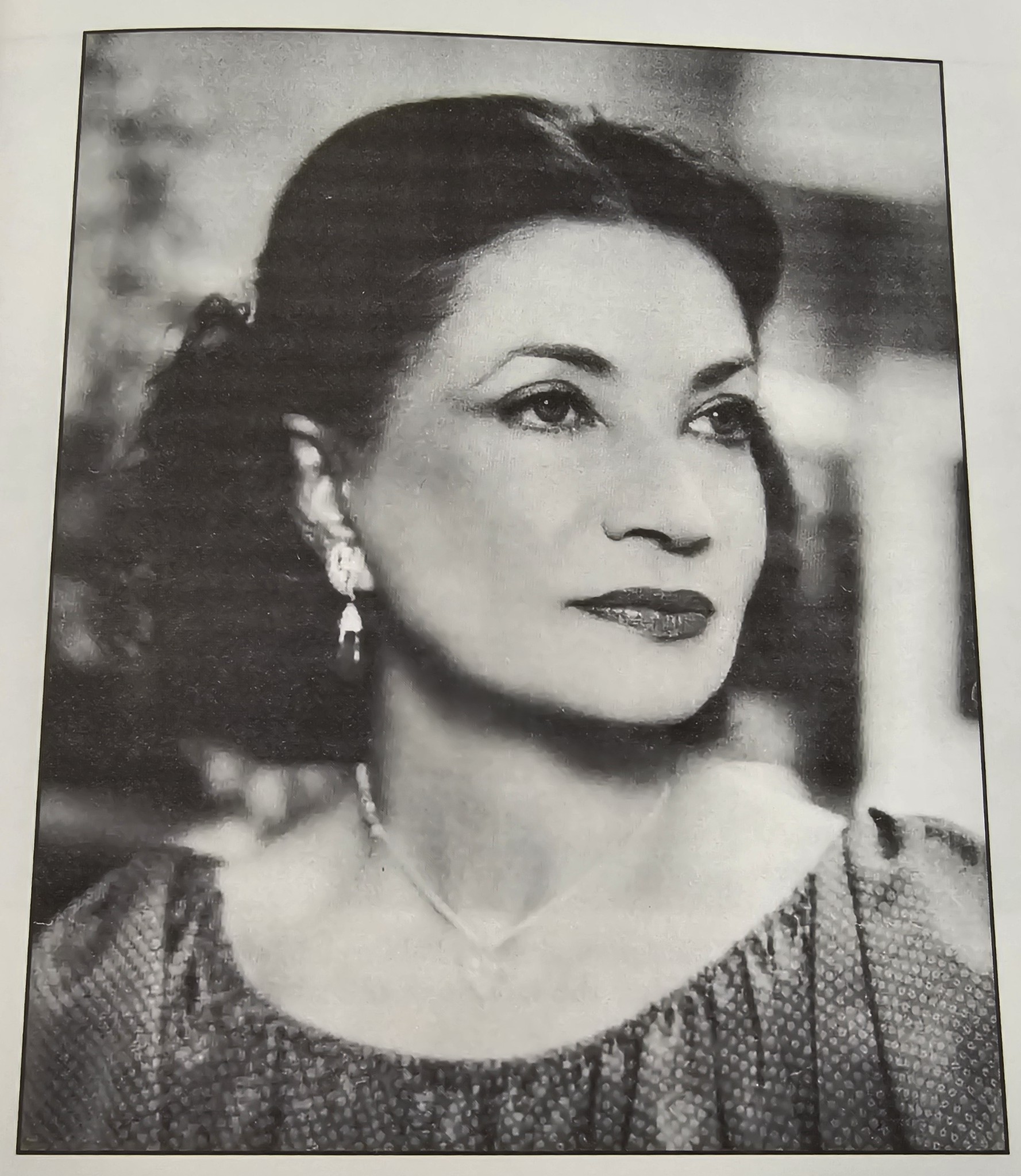
Childhood Memories in Revolutionary Tehran
I was four years old when the revolution happened. I don’t remember much from the Pahlavi era. In fact, I barely remember anything. When the Islamic Revolution erupted, we lived in the centre of Tehran, the capital of Iran.
I remember my mum opening our front door to let frightened protestors hide under the stairs, offering them water. They were shaking, and I could hear gunshots somewhere outside, but I never saw anyone injured. My mother even took me to demonstrations. She was so proud, convinced that she was part of something noble, helping to build a better Iran. She had no idea what was really happening. She was absolutely brainwashed.
Looking back, she reminds me of those who demonstrate in Western cities these days for a cause they barely understand; passionate, maybe even sincere, but unaware of the darker forces at work. My mother never finished high school. She was born into a traditional and moderately religious, or rather, confused old Tehrani’s family and married at a very young age.
Life in a Changing Iran
For me, the Pahlavis were just names in history books. But I remember one day, I took my first-year school photo without covering my hair. The next day, I had to wear a large, slippery scarf that refused to stay in place. I remember that my favourite TV series, Michel Strogoff, suddenly disappeared from the screen, and I couldn’t understand why!
I remember that the Jackpot machines, which once my father let me pull the handle on and win lots of coins, were no longer in the amusement parks. I remember that we went bankrupt, moved house and didn’t have money. I remember Iraq attacked Iran on the first day I started school. I remember not knowing what war really was, but I was terrified. I remember the posters of the Vietnam War on our street showing American soldiers torturing Vietnamese. I remember watching my parents arguing about Banisadr (the first prime minister after the revolution, who later escaped the country)!
I remember accompanying my older sister to the Basij revolutionary classes for women—taught by a man—where they were instructed on how to handle a Soviet-designed Kalashnikov rifle. To me, it was just another adventure, a chance to show off my gymnastic moves. I recall the Qur’an classes held at our home by a religious acquaintance for the whole family; lessons that didn’t last long, thanks to my father’s mischief, which often brought them to an abrupt and amusing end. I remember People chanted “Allahu Akbar” at night.
I barely recall life before the mullahs, but I do remember watching pre-revolution movies and TV shows on videotapes, listening to my mother singing old songs, and eagerly flipping through magazines of our neighbour with the image of celebrities on them, only to be frustrated when my mother didn’t let me keep those old magazines after the neighbour threw them away!
I remember the rationing coupons in my mother’s hand, small pieces of paper that determined what we could eat. I remember when milk and bananas became luxury goods, rare treasures.
I vividly remember the alarms warning of Iraqi air attacks over Tehran, the wide yellow tapes crisscrossing our big windows to keep the glass from shattering. I remember seeing the ruins of a house nearby; people said Iraqi bombs had hit it, killing an entire family, even the children who’d gathered for a birthday party.
I remember my brother and his friends filling their notebooks with drawings of tanks and fighter jets, while our schools constantly asked us to bring donations for the war, giving each of us a piggy bank shaped like a grenade to fill with coins. My father, who had grown up during the Pahlavi era and wasn’t used to a begging government, would always shake his head and say, “The mullahs’ begging hands are always stretched out for more!”
I remember my father, in pain from a toothache, driving nearly a thousand kilometres to take us all to Mashhad, trying to protect us from the threat of Iraqi bombs.
I remember the grim exhibitions scattered across the city, displaying photographs of soldiers tortured by the Mojahedin-e Khalq, that strange Islamist-communist cult that claimed to fight the Islamic Republic yet mirrored its brutality.
I remember my naïve, very young brother sent to the front lines in Kurdistan for his military service. I remember my weary parents anxiously hosting his eccentric, fanatical revolutionary commander in our home, playing the role of polite hosts to make sure their son stayed safe and came back alive.
Years later, I remember that same brother, now older, married with children, sitting on the couch and suddenly breaking down in tears while watching a comedy about the war.
I remember the caravans of captured Iranian soldiers returning from Iraq years after the war had ended, their faces weary but glowing with fragile smiles as they waved to pedestrians along the streets of Tehran.
I remember my school friend who lost his father in the war, and the haunting water fountain in Tehran’s largest cemetery, its water dyed red to resemble blood, a grim reminder of how cheaply life had come to be valued.
And I remember a confused young university student who joined the Mojahedin, was arrested by the Islamic Republic, and released seven years later, utterly changed and brainwashed.
It was she who once warned me during the Green Movement demonstrations: “Be careful. If you’re arrested, you’ll be completely alone. No one will save you.”
Discovering the Pahlavis
As a child, I didn’t know the Shah, the Shahbanoo, or their family. I didn’t know what had happened to them, where they were and why people preferred a bunch of illiterate mullahs to them. I do remember having to watch Khomeini instead of Cartoons on TV, talking with that monotonous, boring voice on that ugly, covered chair all the time, so frustrating. I also remember visiting the royal palaces: Sa’dabad, Niavaran, and the beautiful shell-shaped palace of Princess Shams Pahlavi in Iran. I loved that one the most.
We still learned about Reza Shah’s achievements in school, despite propaganda portraying the Pahlavis as villains. Every year, around the anniversary of the revolution, state TV would release a new drama portraying the Pahlavis as villains. No one around me questioned it, except my father.
He came from a religious family but had a rebellious mind. He prayed once in a blue moon and even volunteered for the war, but he also drank alcohol and cursed the clerics. He was the first to realise what a scam the so-called Islamic Revolution was. “All mullahs must be thrown into the sea,” he used to say.
Yet even he believed the Pahlavis were the antagonists in our story.
Memories of Ashraf’s Palace
I remember, during a trip to one of Princess Ashraf Pahlavi’s palaces, my father pointed to a modern cylinder-shaped fireplace covered with a silver sheet having open circular holes, which was surrounded by a red round couch and said,” Do you see this? It was used for opium pipes.”
I believed him. I was only 10 years old, and he was a mature, experienced adult!
Years later, I read the Princess memoir, Faces in a Mirror, and came across these passages:
“As a member of the Royal Family and an active political figure, I have drawn my share of press attacks — attacks which seem ridiculous to those who know me, but which have been used nevertheless by those who would discredit the Shah’s regime. For example, there have been accusations that I have been involved in opium traffic. Nothing could be further from the truth. The Imperial Organization for Social Service, which I founded, created some 300 medical centers for the treatment of addicts; and I have personally given lectures all over the world, from New York to India, condemning drug abuse and drug smuggling. Iran has also cooperated with the government of the United States in its programs against opium growing. When Richard Nixon visited Iran, he and my brother reached an agreement which would ban such cultivation in our country.
In 1972 my brother made an official visit to Europe, and in his entourage was Houshang Davallou, a Qajar prince. Prince Davallou was an opium smoker, and like other opium addicts, he could substitute opium pills when he was traveling. Hehad asked a friend of his to provide him with opium pills upon his arrival at Geneva Airport. Thirty- five grams of opium were passed, the police noticed this transaction, and Prince Davallou was arrested in the airport. In Europe, this incident made headlines.”
(Faces in a Mirror, page 189)
“La Suisse and La Tribune de Geneve hinted that I was involved — I should have realized that if there was a scandal involving Iranians, Ashraf Pahlavi had to be behind it.
Then in the March 5, 1972, issue, Le Monde dragged up further accusations about still another so-called airport incident: ‘People still remember the incident involving Princess Ashraf, the twin sister of the Shah, and her entanglement with customs officials at Geneva’s Cointrin Airport in 1967. The customs officials found several kilograms of heroin in a suitcase carrying the label of Princess Ashraf. The Princess denied the ownership of the suitcase. The Shah came to his sister’s assistance, and the case was settled very discreetly.’
Although my brother felt I should ignore the article and avoid further publicity, I hired a lawyer and sued Le Monde. A Swiss lawyer in Geneva made an official request to the Swiss government, asking for an explanation of this incident. The Federal Council of Switzerland issued a statement, published in Journal de Genive, which said that no such incident was ever recorded in either police or customs files. The Le Monde trial lasted a few weeks. The court not only awarded me damages, but also required Le Monde to print my denial of its article and publish a statement of my lawsuit against it. (In January of 1979, the allegation that I was involved in the drug business was brought up again, this time in the Washington Post. But in February of 1979, the Post published a correction, which said: ‘The Post has no substantive evidence that these reports are true, and regrets their inclusion.’)
This particular scandal was neatly cleared up, but unfortunately allegations like this linger long after the public has forgotten the details.”
(Faces in a Mirror, page 190)
Reading her words, I believed her instantly. She spoke with honesty, admitting her mistakes elsewhere in the same book, her loneliness, her grief:
“It was then that I started spending my nights in casinos, not as a way of enjoying myself but for the same reasons that people sometimes drink too much or take drugs —to avoid facing reality, even when they can ill afford it. I quickly lost the money I had left, and the shock of what I had done was enough to keep me away from the gaming tables for a very long time.”
(Faces in a Mirror, page 126)
In my opinion, those who tell lies are pitiful and fearful. Brave people might not simply give you details and information, but they see no need to tell lies!
Of all Pahlavi’s family, Ashraf was painted as the worst. I never once heard anyone defending this woman throughout my life in Iran. When I left the country at the age of thirty-five, I still knew almost nothing about her life, her work, or her extraordinary devotion to her brother and her homeland.
I didn’t know about his son Shahryar, who was murdered by Islamic Republic gangs, or his daughter, who died from cancer but never stopped opposing the regime. I didn’t know that she founded one of Iran’s most important social welfare organisations, or that she was one of the first Iranian women to speak publicly about women’s rights and drug rehabilitation.
When I finally learned these things, I felt betrayed; not by her, but by those who had hidden her story from us.
I remember reading Behnoud’s book (These three women) about the Princess in Iran, and thought such a good writer he was, without knowing he was a mullah sympathiser.
I remember a short video about the announcement of the Princess’s death. She was in a wheelchair, reportedly suffering from Alzheimer’s, yet I was relieved to know she passed with dignity, despite the sorrow and losses she had endured unfairly.
Rediscovering Princess Ashraf Pahlavi
I will never forget the first photo that I saw of her as a toddler with her father, brother, and sister. She seemed to feel like an unwanted, insignificant child standing alone, further away from her family.

Princess Ashraf Pahlavi was an Iranian woman, like so many of us, in countless ways. She was a twin of the Shah and grew up in his shadow, like lots of us who grew up in the shadow of our brothers, twins or not.
Years later, when I read her biography, Faces in a Mirror, I noticed she mentioned how she felt insignificant as the twin of a boy and the younger daughter of the family.
“Arriving five hours later, I generated none of the excitement that greeted my brother’s birth. To say that I was unwanted might be harsh, but not altogether far from the truth. There was already my adored sister Shams, and now a son who embodied the fulfillment of my parents’ dreams.”
(Faces in a Mirror, Page 1)
She unexpectedly came to this world a couple of hours after her brother, when no one expected her. I sometimes think she could be a great head of state, though that doesn’t mean her brother wasn’t a great one.
She learned early that she had to fight not only for herself but for all of us, and she did, so fiercely that the mullahs couldn’t bear her influence. She soon became a target for the enemies of the Iranians, inside and outside of Iran.
Her brother was sent to one of the finest schools in the world, Le Rosey, to prepare for his future duties. Although she asked her father to let her attend the same school, her request was denied. She remained in Iran and married quite young—at eighteen—to a chosen groom she never loved, a marriage that ended in divorce shortly after her father’s death. Meanwhile, some self-centred and arrogant members of the Qajar family were able to pursue higher education abroad. I am certain that, reading between the lines of her writings, this contrast must have left her with a lingering sense of inadequacy.
Her father once told her that he wished she had been a boy so she could have backed up her brother and always stayed by his side. He even sent her back alone from South Africa during the Second World War to be with her brother — details she shared in her book, Faces in a Mirror.
“During my father’s last days in Isfahan I had repeatedly asked him to take me with him. Each time he answered: “I would love to have you with me, but your brother needs you more. I want you to stay with him.” Then he would add: “I wish you had been a boy, so you could be a brother to him now.”
(Faces in a Mirror, Page 43)
The Forgotten Book: Time for Truth
Princess Ashraf Pahlavi wrote three books: Faces in a Mirror (1980) in English, which was translated into Farsi and published in Iran, but probably censored; Jamais Résignée (1983) in French, which is also referred to as Unconquered in English, but there is no translation of it in English or Farsi as I am aware of. And Time for Truth (1995) in English. There are also some articles on her official site attributed to her.
Her most important book, Time for Truth (1995), is now nearly impossible to find. From my research, it appears to have been self-published, and I believe it has been deliberately overlooked. When I finally tracked down a copy earlier this year, I was stunned. The book is incisive, detailed, and remarkably candid about what truly happened before and after the revolution. Her insights into the manipulation of Western media and the naïveté of foreign governments are strikingly prophetic.


This book was originally written in 1985, but for reasons explained within its pages, it was not published until 1995. In part of the book, it states:
“I have often wondered why so many journalists and intellectuals accepted without reservation and without sufficient investigation, a picture of the Shah’s regime which, though flawed, did not resemble the image circulated in the media. These people accepted the notion of a peaceful and benign Islamic government, a buttress against communist expansion, without understanding the nature of what was being unleashed on Iran and indeed on the entire Middle East. Now, with the evidence of six years before us, many have retrenched, reconsidered. Unfortunately, these sober second looks rarely have the impact of the ‘initial shock.’ “
(Time for Truth, page5)
In another passage, she further explains:
“I STILL HAVE TEARS TO CRY: I am neither an academic nor a political analyst, but I have spent most of my life on the political scene. And in the years of exile, I have never stopped collecting information about the upheaval that shook my country, ended the Pahlavi monarchy and made Iran “a country that never smiles.” In the books, newspapers, documents and journals which fill my library, in long conversations with other Iranian exiles, I hoped to find fuller answers to questions of “how” and “why”, to clarify a picture that was sketchy and rather confused six years ago. I am not, nor do I claim to be, the most objective observer of these events. But I believe mine is a legitimate point of view, one which could not be heard in the highly emotional climate following the “Islamic Revolution” and during the hostage crisis.
I chose to make public my notes and observations now because time has passed, more facts have come to light—enough to allow a reevaluation of my brother’s reign within a regional framework, an examination of the forces which led to his overthrow, and a clear look at the nature of the regime which replaced him. In the light of information now at hand—disclosures made in books and articles, secret documents uncovered, the personal revelations of politicians and diplomats—I think the case can be made for a “conspiracy” theory, if not by design, then certainly by circumstance.”
(Time for Truth, Page 195 & 196)
Her words resonate deeply. She wasn’t writing as an academic or propagandist; she was writing as someone who had lived through the collapse of her country and the destruction of its future.
I was so moved by this book that I translated it into Persian, despite the risks. Her voice deserves to be heard in the language of her homeland, especially by the new generations who have been fed lies about her and her family.
We are already too late to stop the mullahs. These words were written six years after the Islamic Revolution by Princess Ashraf Pahlavi, in exile; words that now read like a grim prophecy fulfilled:
“The terrorist movement launched by Khomeini in Arab and western countries will survive his regime. In a sense it is more dangerous than Khomeini himself, for the movement includes many diverse elements with local motivations. As long as it remains unidentified, allowed to operate with impunity, it will grow stronger and bolder with each success—and increasingly difficult to stop.”
(Time for Truth, Page 193)
Her warning was not merely political; it was a cry of foresight, echoing across decades. Few listened then, and even fewer remember now.
Why Princess Ashraf Pahlavi’s Story Matters
Princess Ashraf Pahlavi was fierce, intelligent, and profoundly patriotic. She was one of Iran’s most capable diplomats, far more insightful than many Western leaders who patronised her, such as Carter and his team!
She saw what was coming when few others did. She warned that the West’s short-sighted obsession with oil and appeasement would only strengthen tyranny. And she was right.
In her final pages, she wrote:
“For my part, I refuse to give way to pessimism. I cannot and will not believe that six decades of progress can be so easily obliterated. I know that many western politicians and business interests favor normalization of relations with Khomeini’s Iran. Yet I hope that common sense (if not a sense of social conscience) and the lessons of history, will prevail, will raise the question of “what price accommodation?” with a government that violates the most basic of human rights and bases itself on concepts that strikingly suggest Hitler’s Germany. I hope that the West can put aside short-term goals in favor of a well-reasoned long-term policy. For if the centrist opposition to Khomeini is left unsupported, the people of Iran may well see communism as the only hope of deliverance from the mullahs.
But there is a viable alternative to the Black and the Red, and it lies in an Iranian nation under a constitutional monarchy which can assure the peaceful coexistence of all religious beliefs and ethnic diversity. It is up to Iranians to put aside differences which only profit the extreme Left and the extreme Right, to fight together for a unified Iran, to rebuild, for their children, the heritage of a strong and vital country.”
(Time for Truth, Page 205 & 206)
These are not just words from a royal exile; they are a call to conscience, and they still ring true today.
Epilogue
For most of my life, I thought Princess Ashraf Pahlavi was a villain. Now, I know she was one of Iran’s most misunderstood daughters, a woman who endured exile, lies, and loss, yet never lost her faith in her country.
History tried to erase her, but truth and courage have a way of surviving.
“Of the many newspaper clippings I have kept over these painful years of exile, one always comes to mind. Its paper has yellowed with time, yet even in March 1995, it still carries the weight of its truth. Written by Roger Scruton and printed in the London Times on November 6, 1994, under the title ‘Danger Wreckers Still at Work,’ it raises questions that remain painfully relevant. I would like to share it here, because it speaks to matters of ethics, memory, and responsibility:
‘Who remembers Iran? Who remembers, that is, the shameful stampede of western journalists and intellectuals to the cause of the Iranian revolution? Who remembers the hysterical propaganda campaign waged against the Shah, the—press reports of corruption, police oppression, palace decadence, constitutional crisis? Who remembers the thousands of Iranian students in western universities, enthusiastically absorbing the fashionable Marxist nonsense purveyed to them by armchair radicals, so as one day to lead the campaign of riot and mendacity which preceded the Shah’s downfall?
Who remembers the behavior of those students who held as hostage the envoys of the very same power which had provided them their “educations”? Who remembers Edward Kennedy’s accusation, that the Shah had presided over “one of the most oppressive regimes in history,” and had stolen “umpteen billions of dollars from Iran”?
And who remembers, the occasional truth that our journalists enabled us to glimpse, concerning the Shah’s real achievements, his successes in combating illiteracy, backwardness and powerlessness of his country, his enlightened economic policy, the reforms which might have saved his people from the tyranny of evil mullahs, had he been given the chance to accomplish them? Who remembers the freedom and security in which journalists could roam Iran gathering the gossip that would fuel their fanciful stories of a reign of terror?
True the Shah was an autocrat. But autocracy and tyranny are not the same. An autocrat may preside, as the Shah sought to preside, over a representative parliament, over an independent judiciary, even over a free press and autonomous universities.
The Shah, like Kemal Ataturk, whose vision he shared, regarded his autocracy as the means to the creation and protection of such institutions. Why did no one among the western political scientists trouble to point this out, or to rehearse the theory which tells us to esteem not just the democratic process, but also the representative and limiting institutions which may still flourish in its absence? Why did no one enjoin us to compare the political system of Iran with that of Iraq or Syria? Why did our political scientists rush to embrace the Iranian revolution, despite the evidence that revolution in these circumstances must be the prelude to massive social disorder and a regime of terror?
Why did the western intelligence go on repeating the myth that the Shah was to blame for this revolution, when both Khomeini and the Marxists had been planning it for thirty years, and had found, despite their many attempts to put it into operation, only spasmodic popular support?
The answer to all these questions is simple. The Shah was an ally of the West, whose achievement in establishing limited monarchy in a vital strategic region had helped to guarantee our security, to bring stability to the Middle East, and to defer Soviet expansion. The Shah made the fatal mistake of supposing that the makers of western opinion would love him for creating conditions which guaranteed their freedom. On the contrary, they hated him. The Shah had reckoned without the great death wish that haunts our civilization and which causes vociferous members to propagate any falsehood, however absurd provided only that it damages our chances of survival.
For a while of course, those vociferous elements will remain silent on the embarrassing topic of the collapse of Iranian institutions, the establishment of religious terror and the end of stability in the region. Those who lent their support to this tragedy simply turned their back on it and went elsewhere, to prepare a similar outcome for the people of Turkey, Egypt, Algeria, El Salvador—or wherever else our vital interests may be damaged.
Of course, it is difficult now for a western correspondent to enter Iran, and if he did so it would not be fun. He would have to witness quietly, and in terror of his life, things which beggar description—the spontaneous “justice” of revolutionary guards, the appalling scenes of violence, torture and demonic frenzy, the public humiliation of women, daily sacrifices of lives too young to be conscious of the meaning for which they are condemned to destruction.
He would also have to confront the truth which has been staring in the face for years, and which he could still recognize had the habit of confessing to his errors been preserved; the truth that limited monarchy is the right form of government for Iran, which can be saved only by the restoration of the Shah’s legitimate successor. But such a result would be in the interests, not only of the Iranian people, but also of the West. Hence few journalists are likely to entertain it.‘ ”
(Time for Truth, Page 207 to 209)
I believe her wisdom, strength, and unshakable love for Iran must be remembered.
Her story is not just about royalty or politics; it’s about resilience, about standing tall when the world wants to bury you.
Perhaps, in rediscovering her, I’ve also rediscovered a part of myself, the part that still believes in Iran’s dignity, and in the power of truth to outlive every lie.
She deserves to be heard, celebrated and appreciated for who she was and what she did for Iran and Iranians, especially women. Her wisdom must be spread through her own words!
Zahra Pedram Jafari, Nov 2025